


University of World Languages in Uzbekistan
State university
Tashkent city
0.0
(0 Feedbacks)

Admission period
5 June 2026 - 25 June 2026


University licenses

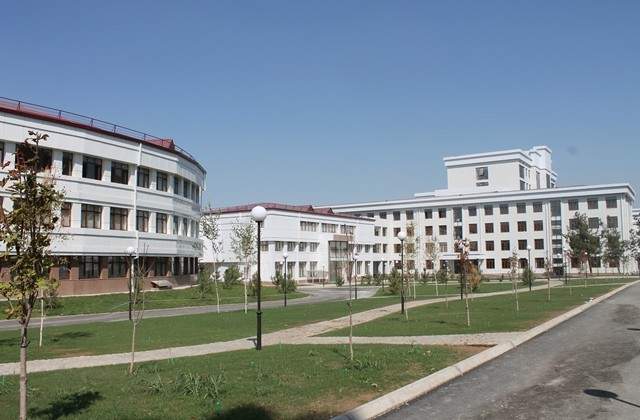
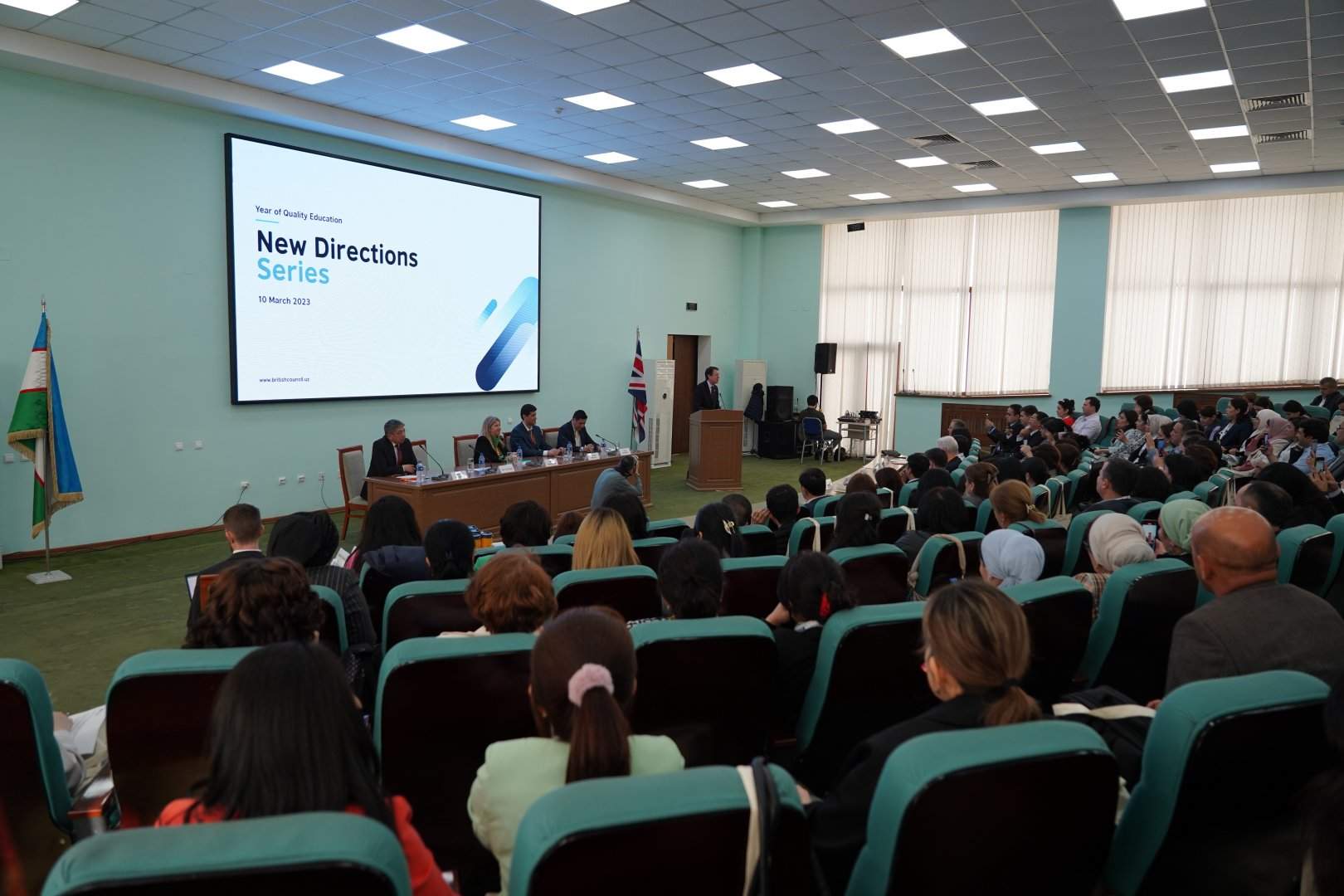


About university
About the University:
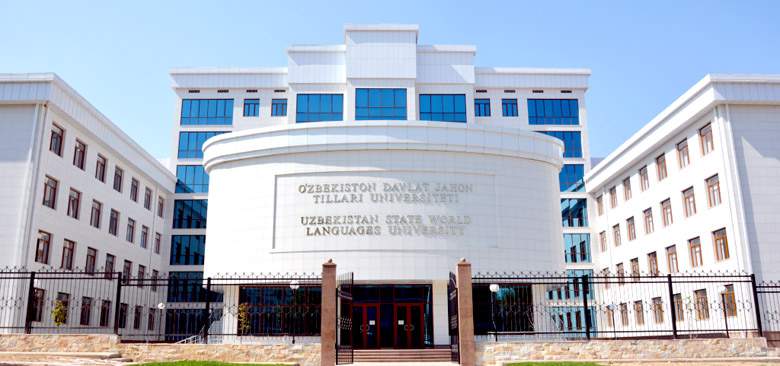
The Uzbekistan State University of World Languages (UzDJTU) began its activity in 1949 under the name of the Tashkent Pedagogical Institute of Foreign Languages. The university has a history of 70 years. In 1992, the Tashkent Pedagogical Institute of Foreign Languages and the Republican Institute of Russian Language and Literature merged to become the State University of World Languages of Uzbekistan. Today, more than 23,000 students at the university study about 20 foreign languages based on world educational standards. Every year, the university prepares specialists with a bachelor's degree in 15 fields of study and a master's degree in 13 fields of study.
University grants:
Grants are available at the university. State grants are allocated to talented students who have obtained high marks in the entrance exams. These grants are awarded for one academic year only, and students accepted on the basis of a contract have the opportunity to study on the grant in the following academic years.
University Scholarship:
Students studying on the basis of a state grant:
The basic amount of the scholarship is paid in the 1st semester of the first year;
- Starting from the next semester, depending on the results of the previous semester, the scholarship will be awarded and paid in the following order:
- Students with excellent performance in all subjects will be paid with a 20% increase in the basic amount of the scholarship;
- Scholarships will not be awarded to students who satisfactorily mastered 30% or more of their general subjects, i.e. scored less than 71 points. With the exception of orphans and children deprived of parental care and students with group 1 and 2 disabilities;
- All other students receiving education on the basis of a state grant will be paid the basic amount of the scholarship.
Scholarships are awarded and paid to students studying on the basis of a payment contract in the following order:
- Contract students can study with or without a scholarship;
- The basic amount of the stipend will be paid to those under the contract, regardless of the mastery rate.
- The stipend will be assigned and paid after the contract amount has been paid.
Scholarships are paid for students with group I and II disabilities in the following order:
- Students with group I and II disabilities are assigned and paid a 50% higher stipend than the base amount of the stipend, regardless of whether they study on a grant or a contract;
- Students who belong to the group of orphans and children deprived of parental care, who are fully supported by the state, are assigned and paid a scholarship in the basic amount of the scholarship.
Entry requirements: Participation in state exams organized by BMB(DTM).
University Dormitory: There is a hostel in the university.
Bachelor:
Documents required from applicants: passport, diploma or certificate.
Contract amount: Contract prices are calculated on the basis of the standards published by the State Commission for Coordination of Admission Processes to State Higher Education Institutions of the Republic of Uzbekistan.
Applicants are selected through the results of BMB(DTM) model test questions in the university entrance exams.
Master's:
Qualification: 15+
Documents required from applicants: applicant's bachelor's degree and relevant national or international certificate of foreign language proficiency
At the master's level, women have the opportunity to study on the basis of a full grant.
International Cooperation: The Uzbekistan State University of World Languages collaborates with prominent higher education institutions, such as Moscow State University, Adyghe State University, Astrakhan State University, Vladimir State University, Kurgan State University, Russian Language State Institute in Pushkin, Moscow State Linguistic University, Ural State Pedagogical University of Foreign Languages, Kalmyk State University, Nizhny Novgorod State Linguistic University.
In addition, the university has long-term collaborations with the following prestigious international educational institutions:
- Norwich Institute for Language Education (UK);
- London Metropolitan University (UK);
- Indiana University (USA);
- Johannes Gutenberg University of Mainz (Germany);
- Goethe Institute (Germany);
- Alliances Institute (France);
- Versailles Academy (France);
- University of Cannes (France);
- University of Bordeaux (France);
- St. Petersburg University (Russia), and others.
Programs
Directions are not available
Admission Quota and Entrance Scores
| Course of Study | Admission quota | Scholarship Entry Scores | Entry points for the contract |
|---|---|---|---|
| Relationships with Information Services and Communities | 0 / 35 | - | 60.5 |
| Philology and Teaching Languages: Arabic Language | 20 / 40 | 170.8 | 122.6 |
| Phonology is the branch of linguistics that deals with the systematic organization of sounds in languages. It studies how sounds are produced, transmitted, and perceived in different languages and aims to understand the patterns and rules that govern their usage. Phonology is concerned with the sounds themselves, rather than the meanings of words or the grammatical structure of sentences. It examines distinctive features of sounds, such as their place and manner of articulation, and analyzes how these features are used to distinguish between different words and to convey meaning. Phonology also looks at how sounds interact with each other in different languages, such as patterns of sound change and processes such as assimilation or deletion. Overall, phonology plays a crucial role in our understanding of the sound systems of languages and how they are used in communication. | 0 / 15 | - | - |
| Teaching Philology and Languages: English Language | 0 / 45 | - | 99.5 |
| Teaching Philology and Languages: Spanish Language | 0 / 85 | - | 56.9 |
| Teaching Philology and Languages: Korean Language. | 0 / 85 | - | 67.2 |
| Teaching Philology and Languages: German Language | 0 / 85 | - | 57.3 |
| Teaching Philology and Languages: Russian language | 0 / 200 | - | 88.3 |
| Teaching Philology and Languages: Chinese Language | 0 / 85 | - | 56.8 |
| Studying Philology and Languages: Japanese Language | 0 / 85 | - | 57.5 |
| Our company's main activity is translation and interpretation: English language. | 5 / 10 | 161.2 | 147.3 |
| Journalism: international journalism | 0 / 35 | - | 64.2 |
| Russian language in other language groups (for Uzbek groups) | 30 / 60 | 147.8 | 126 |
| Politics | 0 / 15 | - | 111.6 |
| Translation theory and practice: Arabic language | 20 / 40 | 163.4 | 105.2 |
| Translation theory and practice: French language | 5 / 10 | - | 59.6 |
| Translation theory and practice: English language | 0 / 45 | - | 82.3 |
| Translation theory and practice: Italian language | 15 / 30 | 114.2 | 62.4 |
| Translation theory and practice: German language. | 10 / 20 | 70.2 | 65.1 |
| Foreign Language and Literature: English Language | 0 / 190 | - | 98.4 |
| Literature Studies: | 0 / 0 | - | - |
| Literary Studies: English Literature | 9 / 0 | - | - |
| Literary Studies: Russian Literature | 4 / 0 | - | - |
| Information service and communications with the community | 6 / 0 | - | - |
| Good translation (English language) | 2 / 0 | - | - |
| Linguistics: | 0 / 0 | - | - |
| Linguistics: French language | 3 / 0 | - | - |
| Linguistics: English language | 36 / 0 | - | - |
| Linguistics: Spanish language | 3 / 0 | - | - |
| Linguistics: Korean language | 5 / 0 | - | - |
| Linguistics: German language | 6 / 0 | - | - |
| Linguistics: Russian language. | 5 / 0 | - | - |
| Linguistics: Chinese Language | 3 / 0 | - | - |
| Linguistics: Japanese language | 3 / 0 | - | - |
| Language and Literature: Russian language and literature | 1 / 0 | - | - |
| Cognitive linguistics, linguistic translation studies (English language) | 8 / 0 | - | - |
| Synchronized translation (by languages) | 15 / 0 | - | - |
| International journalism | 6 / 0 | - | - |
| 5 / 10 | 136.7 | 92.5 | |
| 5 / 20 | 99.7 | 76.6 | |
| 3 / 9 | 124.7 | 91.8 | |
| 2 / 10 | 160.9 | 132.2 |
Gallery
1 of 7
Aloqa

- Uzbekistan, Tashkent, Uch-tepa district, street CHILONZOR-G9A, KICHIK XALKA YO'LI, 21


Feedbacks

No any feedbacks
Feedbacks
No any feedbacks