


Tashkent Chemical Technology Institute
State university
Tashkent city
0.0
(0 Feedbacks)

Admission period
5 June 2026 - 25 June 2026


University licenses

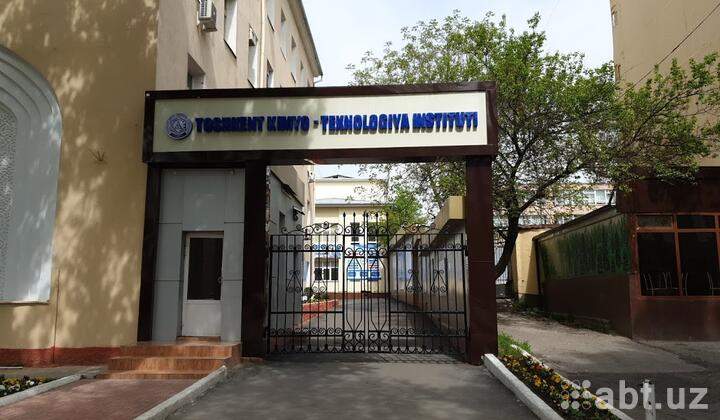


About university
About the Tashkent Chemical-Technological Institute:
The Tashkent Chemical-Technological Institute (abbreviated as Institute) is a structural unit of the Academic Affairs and Registrar's Office (abbreviated as Office) responsible for admission of students, organizing the educational process, providing services to students, organizing academic activities, creating and improving educational programs and curricula, ensuring openness and transparency of the education process, minimizing bureaucratic barriers in the system, processing and analyzing information, and optimizing decision-making processes.
Vocational Education:
According to the order "On the Approval of the Procedure for Organizing Vocational (Special) and Evening (Shift) Education in Higher Education Institutions" of November 21, 2017 No. 930 of the Cabinet of Ministers of the Republic of Uzbekistan, the "Vocational Education Department" was established at the Tashkent Chemical-Technological Institute (TCCTI) in the 2018-2019 academic year. The Department offers the following fields of study:
1. 5310900-Metrology, Standardization, and Product Quality Management (Chemical and Food Production).
2. 5320300 - Technological Machines and Equipment (Food Industry).
3. 5320400 - Chemical Technology (by types of production).
4. 5321000 - Food Technology (by types of products).
5. 5321300 - Oil and Gas Refining Technology.
The duration of vocational education is 5 years.
Joint Programs:
Beginning in the 2018-2019 academic year, joint educational programs were launched by the Tashkent Chemical-Technological Institute and foreign partner institutions of higher education based on cooperation agreements. These programs provide teaching in joint programs and awarding dual diplomas. The Belarusian National Technical University (BNTU) offers joint educational programs in the 4+1 form of vocational education in 4 majors and 3 master's specialties in the form of 1+1.
Joint educational programs have been implemented to prepare specialists in the following fields of study: 2+2 day-time education, 4+1, 3+2 full-time vocational education, and 1+1 master's degree programs.
Student Accommodation:
The Tashkent Chemical-Technological Institute Student Hostel is located at Olmachi Street 3 in the Mirzo Ulugbek district of Tashkent city. The hostel was built in 1972 and underwent capital repairs in 2021. The general capacity of the TCCTI hostel is 840 people.
The hostel has sports halls equipped with sports equipment, 2 tennis tables that were recently purchased, and is open until 10:00 pm for students to use after their classes. The Academic Resources Center of the Institute has a branch at the student hostel that provides access to 3956 copies of books, including 719 textbooks, 1698 manuals, 768 works of fiction, 168 scientific works, and 185 presidential writings, among others. Students can use the study hall until 10:00 pm. Five important recreational areas have been created for the students, equipped with interesting stands, musical instruments such as the dutar, rubab, guitar, nay, and tambourines, and special sofas. The student hostel also has computer rooms with 20 modern computers, all connected to the internet. There are eight Wi-Fi devices for students to access the internet and social networks. The hostel has a TAS-IX 1000 Mb/s and external internet channels with a speed of 600 Mb/s.
For the students' cultural and entertainment needs, the hostel has eight 32-inch televisions, a sports field, sports trainers, eight modern kitchens, eight dining rooms, eight laundry rooms, and sixteen washing machines equipped with automatic washing technologies.
Programs
Directions are not available
Admission Quota and Entrance Scores
| Course of Study | Admission quota | Scholarship Entry Scores | Entry points for the contract |
|---|---|---|---|
| Service for organizing meals for residents and tourists | 50 / 100 | 68.2 | 56.7 |
| Biotexnologiya (in terms of systems) | 15 / 35 | 127.9 | 115.5 |
| Ecology and environmental protection (by systems and areas) | 10 / 40 | 82.2 | 64.3 |
| Energy (by branches) | 30 / 70 | 100.8 | 69.3 |
| Functional Nutrition and Children's Product Technology. | 10 / 40 | 79.1 | 61 |
| Gas deep recycling technology | 10 / 40 | 69.3 | 57.9 |
| Chemical technology (types of production) | 5 / 20 | 79.5 | 63.4 |
| Chemical technology (chemical technology of producing cellulose-paper) | 5 / 20 | 68.5 | 58.6 |
| Canning technology | 10 / 40 | 73.7 | 60.3 |
| Marketing (by sectors and fields) | 10 / 40 | 114.4 | 68.3 |
| Materialscience and new materials technology (in terms of networks) | 0 / 25 | - | 57.2 |
| Protection of Labor and Technical Safety (in terms of networks) | 10 / 15 | 86.3 | 69.3 |
| Management (by networks and fields) | 10 / 40 | 130.4 | 75.8 |
| Metrology, standardization, and product quality management (by sectors) | 20 / 55 | 72.7 | 60.3 |
| Oil and oil-gas reprocessing technology | 25 / 50 | 75.4 | 64.4 |
| Petrochemical Technology | 10 / 40 | 80.3 | 62.8 |
| Food technology (by types of products) | 5 / 20 | 75.4 | 66.1 |
| Professional Education: Chemical Technology | 10 / 40 | 74 | 59 |
| Automating and managing technological processes and production (in terms of networks) | 10 / 40 | 81.7 | 56.9 |
| Technological machinery and equipment (in terms of networks) | 25 / 75 | 98.9 | 66.2 |
| Winemaking technology, fermented beverages and non-alcoholic drink technology | 20 / 55 | 68.5 | 56.8 |
| Yog'lar, ether oils, and perfumery-cosmetics product technology. | 10 / 40 | 88.5 | 65.5 |
| Environmental protection (in terms of systems and areas) | 1 / 0 | - | - |
| Biotexnology (by product type) | 15 / 0 | - | - |
| Catalyst and Adsorbent Technology | 6 / 0 | - | - |
| Machines and equipment of chemical industry and manufacturing materials companies | 4 / 0 | - | - |
| Chemical technology (types of production) | 60 / 0 | - | - |
| Chemical technology processes and equipment (by type of production) | 8 / 0 | - | - |
| Chemical and petrochemical technologies | 6 / 0 | - | - |
| Project management | 4 / 0 | - | - |
| Marketing (by sectors and fields) | 2 / 0 | - | - |
| Management (by networks and areas) | 2 / 0 | - | - |
| Metrology, standardization and quality management (by sectors) | 6 / 0 | - | - |
| The processes and equipment for oil and gas reprocessing | 6 / 0 | - | - |
| Oil and gas refining and chemical technology | 12 / 0 | - | - |
| Production and reprocessing technology for food products (by types of products) | 60 / 0 | - | - |
| Food processing machinery and equipment. | 8 / 0 | - | - |
| Food safety | 20 / 0 | - | - |
| Professional Theory and Methodology of Education (by specialization) | 2 / 0 | - | - |
| Cellulose-paper production technology and processes | 8 / 0 | - | - |
| Automating technological processes and manufacturing (in terms of networks) | 10 / 0 | - | - |
| Timber shipping and wood science | 4 / 0 | - | - |
| Highly molecular accumulations in chemical technology (according to types) | 15 / 0 | - | - |
| 15 / 35 | 68.2 | 56.9 | |
| 15 / 35 | 70.8 | 56.7 | |
| 15 / 35 | 68.1 | 56.8 | |
| 20 / 55 | 71.6 | 58.8 | |
| 10 / 15 | 89.8 | 78.8 | |
| 5 / 20 | 103 | 89.4 |
Gallery
1 of 1
Feedbacks

No any feedbacks
Feedbacks
No any feedbacks